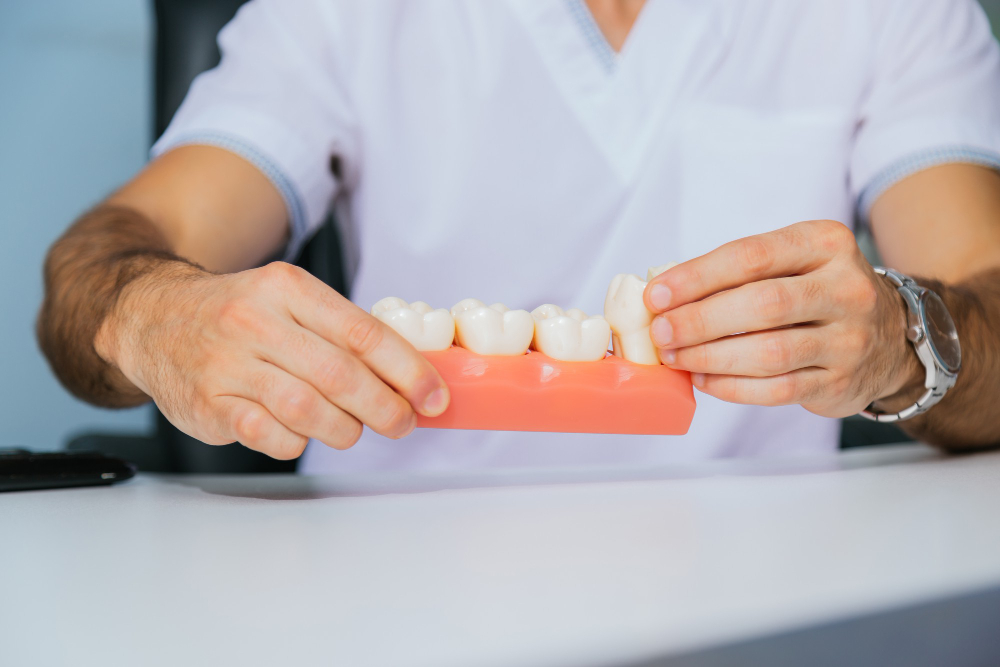
Dental bridges are a common way to replace missing teeth. They help restore your smile and make chewing easier. If you have lost a tooth, a dental bridge can fill the gap. Many people choose dental bridges because they look natural and work well. In this blog, you will learn about types of dental bridges, the dental bridge procedure, benefits of dental bridges, and dental bridge aftercare. Understanding these points can help you make the best choice for your oral health.
What Are Dental Bridges?
Dental bridges are false teeth held in place by the teeth next to the gap. Dentists use them to fill spaces left by missing teeth. Usually, a dental bridge has one or more artificial teeth. These are called pontics. The teeth on either side of the gap, called abutment teeth, support the bridge. Because dental bridges are fixed, you cannot remove them yourself. They help you chew, speak, and smile with confidence. According to the American Dental Association (ADA), dental bridges are a safe and effective treatment for missing teeth.
Types of Dental Bridges
There are several types of dental bridges. Each type works best for different needs. Knowing the types of dental bridges can help you and your dentist choose the right one.
Each type has its own benefits and uses. Your dentist will help you decide which is best for you.
Who Needs a Dental Bridge?
If you have one or more missing teeth, you may need a dental bridge. Missing teeth can cause problems. For example, your other teeth may shift into the empty space. This can lead to bite problems or jaw pain. Also, missing teeth can make it hard to chew or speak clearly. Dental bridges are a good choice if:
However, not everyone is a candidate. Your dentist will check your mouth and discuss your options.
The Dental Bridge Procedure: Step-by-Step
Getting a dental bridge usually takes two or more visits. Here is a step-by-step guide to the dental bridge procedure:
Sometimes, more visits are needed for adjustments. Your dentist will make sure the bridge feels comfortable and works well.
Benefits of Dental Bridges
Dental bridges offer many benefits. They can improve your oral health and quality of life. Here are some key benefits of dental bridges:
Because dental bridges are custom-made, they look and feel natural. Many people find that bridges help them enjoy their favorite foods again.
Risks and Considerations
Although dental bridges are safe, there are some risks and things to consider. For example, the teeth that support the bridge may become sensitive. Sometimes, decay can form under the crowns if you do not clean well. In rare cases, the bridge may become loose or break. It is important to follow your dentist’s advice and keep up with regular check-ups. According to the ADA, good oral hygiene can help your bridge last many years.
Aftercare and Maintenance Tips
Proper dental bridge aftercare is important for long-lasting results. Here are some tips to keep your bridge in good shape:
With good care, dental bridges can last 5 to 15 years or even longer.
Frequently Asked Questions about Dental Bridges
Conclusion
Dental bridges are a reliable way to replace missing teeth. They restore your smile, help you chew, and keep your mouth healthy. There are different types of dental bridges, and the procedure is simple and safe. With proper aftercare, your bridge can last for many years. For the best results, consult a dentist at SRAVANTHI DENTAL HOSPITAL for personalized advice about dental bridges.